Must read stuff · No. 19
The printer that only one person could fix
The warehouse printer jammed every Tuesday for six years, and the fix lived in one man's wrists. When he retires, the machine keeps working and the knowledge does not. What gets lost when a repair is a person instead of a procedure, and why writing it down is harder than it sounds.
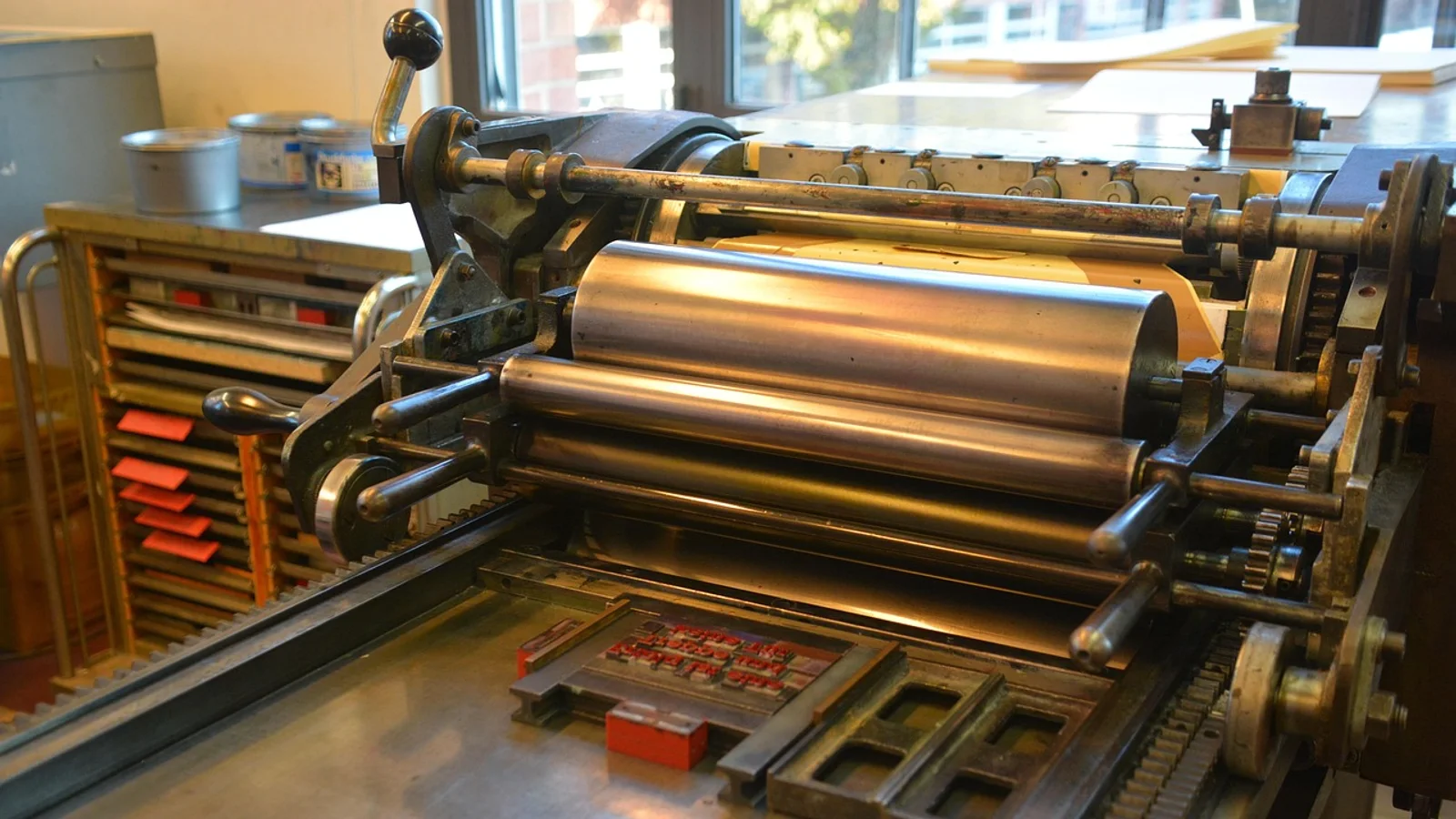
The printer jams on a Tuesday, which is when it always jams, and I am standing in the warehouse office watching a man in his sixties open the side panel with the flat of his hand. His name is Bengt. He has worked here since before the shelving went up. He does not look at the error code. He reaches in, lifts a green lever I have never noticed, and pulls out a sheet of paper that is creased in a way that tells him something. He says nothing. He closes the panel. The printer resumes. I have been called in to look at the network, and I have just watched six years of maintenance happen in nine seconds.
What the error code does not say
The printer is a floor-standing laser unit, the kind that costs more than a used car and is expected to last a decade. It has a display that shows codes. Bengt has never read the codes. He knows that the paper tray on the left feeds slightly crooked when the humidity is high, and that the crease pattern on a jammed sheet tells him whether the problem is in the fuser or the feed rollers. He learned it the way anyone learns a machine: by being the only one who would touch it.
I ask him how he knows. He says the machine tells him. I ask what it says. He taps the side panel, near the hinge, where the plastic is worn smooth. He says it sounds different when the rollers are dry. That is the whole answer. The error code says PAPER JAM. The sound says which roller, and how dry, and whether it will jam again before lunch.
The mechanism underneath
A printer is a machine with a maintenance schedule, and the schedule is in a manual that nobody reads. The manual gives intervals for replacing rollers. It does not say that this particular machine, in this particular warehouse, with this particular humidity and this particular grade of paper, needs the rollers cleaned every few weeks and replaced well before the manual’s interval. That knowledge was not in the manual. It was in Bengt, and it got there through repetition and irritation and the specific boredom of doing the same repair until it becomes a reflex.
This is the part that gets called institutional knowledge, which is a phrase that makes it sound like a document. It is not a document. It is a set of physical habits that live in a person’s hands, and it leaves when the person leaves, and the leaving is usually a retirement or a resignation or a Tuesday when someone finally has had enough.
The good part and the cost
The good part is that Bengt’s knowledge worked. The printer jammed every Tuesday for six years, and every Tuesday it was fixed in under a minute, and nobody in the warehouse ever lost a morning to it. The machine did its job. The man did his. The system, such as it was, held.
The cost is that I am now sitting in a meeting about what happens when Bengt retires, which is in four months, and the answer is that nobody knows. The maintenance contract covers the printer, but the contract assumes the printer behaves like the manual says it will. It does not. It behaves like a machine in a warehouse with high humidity and cheap paper, and the only person who knows how it behaves is the person who is leaving.
I have seen this before. A clinic where the autoclave had a sequence that was not in the instructions. A law firm where the document management system had a workaround that lived in one paralegal’s memory. The pattern is always the same: the workaround works, so nobody documents it, because documenting it would mean admitting that the official procedure does not work, and admitting that is somebody’s job to fix, and that somebody is busy.
The strongest objection
The strongest opposing view is that this is a management failure, not a knowledge problem. If the printer needs different maintenance than the manual says, then the maintenance schedule should be updated. If the workaround is real, it should be written down. The fact that it was not written down is not a charming story about tacit knowledge. It is a failure to do the boring administrative work of running a building.
That argument is correct. I have made it myself, in other buildings, about other machines. The maintenance schedule should have been updated years ago. The workaround should have been written down. The person who should have written it down was busy, and the person who knew it was not asked, and the printer kept working, so nobody noticed.
What the next person inherits
I might be wrong about how much of this can be captured. Maybe Bengt’s knowledge is not as fragile as it looks. Maybe the next person will develop their own feel for the machine, and the six years of Bengt’s reflexes will be replaced by six years of someone else’s, and the printer will keep jamming on Tuesdays and keep getting fixed. That is how it has always worked. The knowledge does not transfer. It regenerates.
But regeneration takes time, and the time is measured in mornings lost to a jam that nobody can diagnose, and in the slow erosion of confidence that happens when a competent person cannot make a machine work. I have watched that erosion. It is quiet. It looks like someone standing in front of a printer, pressing the same button, waiting for a different result.
Bengt is in the warehouse office now, showing the new guy where the green lever is. The new guy is holding a phone, filming. Bengt does not seem to mind. He lifts the lever, points at the crease pattern, says something I cannot hear. The new guy nods. The phone keeps recording. The printer sits between them, warm and patient, waiting for its next Tuesday.
#Essay #smallbusiness #maintenance #knowledge #tacit knowledge #small business #retirement #workplace systems