Must read stuff · No. 18
The photograph of the gauge behind the pump
A plumber photographs a pressure gauge that is almost impossible to read, not for a report but for the next person who opens the cupboard. The service software will record that the boiler was serviced. It will not record how to see the gauge, and that is the part the next visit depends on.
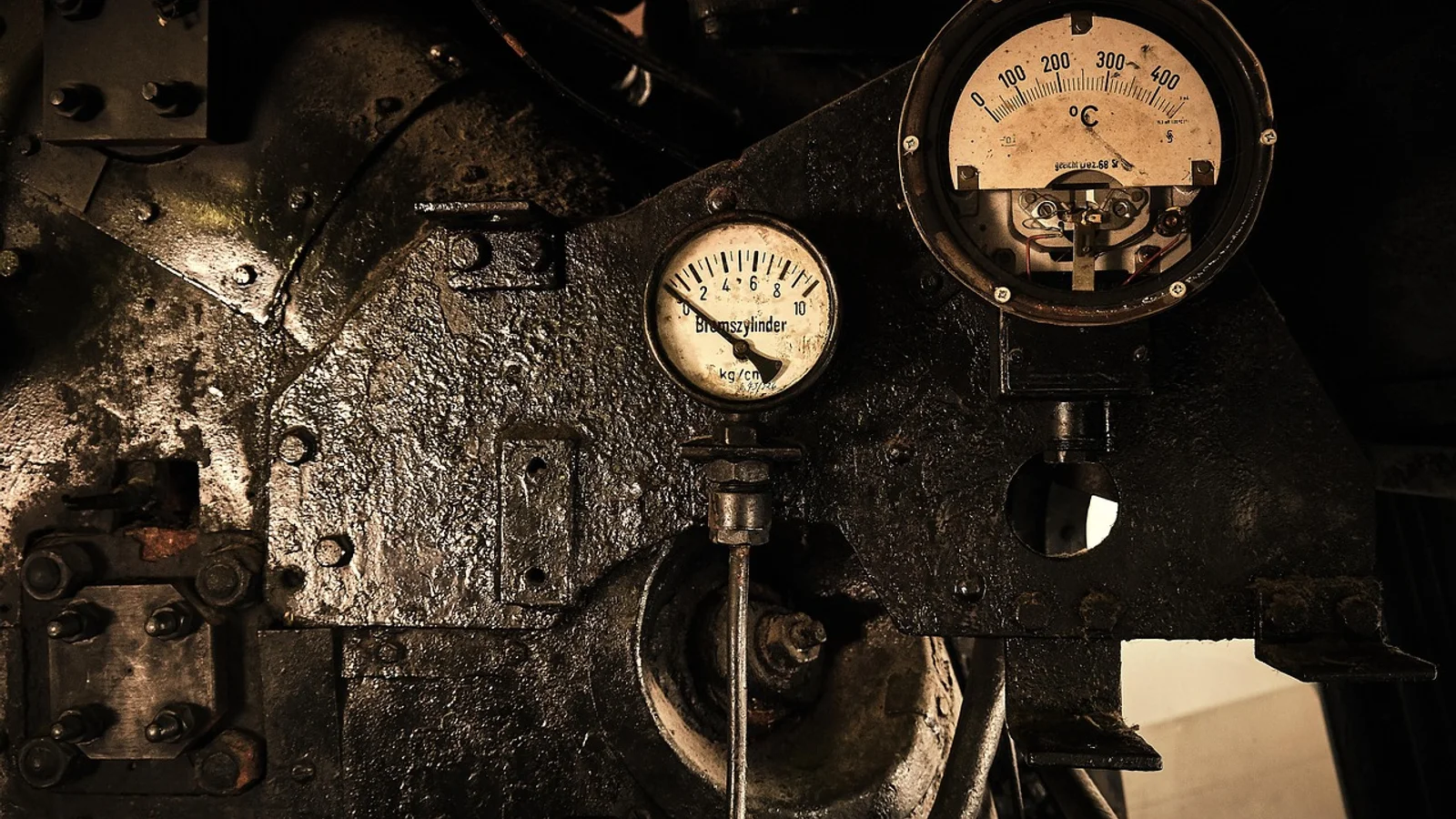
I am standing in the doorway of the boiler cupboard on the second floor of the physiotherapy clinic, and I can smell dust and hot metal. It is a Thursday morning in late January. Rolf is on his knees with a headlamp, his back to me. Elin is behind him, holding her phone at an angle, photographing the pipes.
She is not photographing the whole cupboard. She is photographing the exact spot where the pressure gauge sits behind the circulation pump, where the label has peeled off and the numbers are only visible if you know to tilt your head to the left and look past the insulation. She takes three photos, checks the sharpness of one, and puts the phone back in her pocket.
Rolf says nothing. He is writing on a paper tag with a pencil, tying it to the valve. The tag says a date, a name, and a single word: again.
What the report will say
When they leave, the service report will say the boiler was serviced and the pressure was correct. It will have a timestamp and a signature. The clinic manager will file it, and the file will be legible, searchable, and auditable. If anyone asks whether the boiler was serviced on that Thursday in January, the answer will be yes, and there will be a document to prove it.
The report will not say how to see the gauge. It will not say that the label peeled off sometime in the last decade, or that the insulation has to be pushed aside with the back of a hand, or that the numbers only line up when you tilt your head to the left. It will not say that the tag on the valve is there because Rolf has been in this cupboard before and knows that the next person will not be told any of this unless someone writes it down.
That is the part the next visit depends on. Not the pressure reading. The way to get it.
The workaround that lives in a person
Every small firm has at least one task that only one person knows how to do. The knowledge is not in a procedure. It is in the habit of the person who has done it a hundred times. They learned it by watching someone else, and they will pass it on the same way, if they are lucky enough to have someone to pass it to.
The service management system records the what and the when. It records that the boiler was serviced, that the pressure was correct, that the invoice was sent. It does not record the where exactly, or the workaround discovered by being in the room, on your knees, with a headlamp.
That knowledge travels through photographs, paper tags, and apprentices who watch. It survives only as long as the people who carry it. When the system is asked to hold it, it flattens it into a checkbox. The checkbox is true. It is also empty.
The good side of the report
The report is not the enemy. It protects the customer, who can prove the work was done. It protects the firm, which can prove it did the work. It makes the work visible to people who were not in the room, which is most of the people who need to know.
Before the software, the record was a paper job sheet in a folder, and if the folder was lost, the work was lost with it. The system is better than that. It is faster, more reliable, and harder to lose. It gives the clinic manager something to point at when the boiler fails in July and the insurance company asks for the service history.
The good part is real. The report is legible in a way that the tag on the valve is not. The tag says a date, a name, and the word again. It does not say what was done or whether it worked. It assumes the reader already knows.
The cost of a complete-looking record
The cost is the impression that the record is complete. The report is accurate, and it is not enough. The part that requires a person to be in the room, on their knees, with a headlamp, is not in it. And because the report looks complete, nobody asks what is missing.
Elin’s photograph is not documentation for a customer or a compliance file. It is a message to the next person who will be in this cupboard. It is specific, local, and cheap. It will be lost when she changes phones. The paper tag will fade. The knowledge will leave when Rolf retires, unless someone else learns to tilt their head to the left.
The strongest opposing view
Informal knowledge is fragile and unfair. If the only way to know how to read the gauge is to have been shown by Rolf, then the clinic is dependent on Rolf. When he retires, the knowledge leaves with him. A proper system, with photographs attached to the asset record, would be more reliable and more equitable. It would outlast the phone, the tag, and the person.
That is true. The software can do it. A photograph can be attached to the boiler’s asset file, with a note explaining the angle and the insulation. The reason it does not exist is not that the software cannot do it. It is that nobody has been paid to do it. The person who knows how to see the gauge is the person who is on their knees in the cupboard, and their job is to fix the boiler, not to write the manual.
I might be wrong about the value of the informal channel. The photograph on Elin’s phone will be lost, and the tag will fade, and the next person will spend ten minutes figuring out what Rolf already knew. A structured record would outlast both of them. The informal channel is cheap because someone else is paying for it later.
What the cupboard holds
Elin puts her phone back in her pocket and picks up the pencil. She writes the same date on a second tag, ties it to the other valve, and follows Rolf down the stairs. The boiler hums behind them. The gauge is still behind the pump, still only visible if you tilt your head to the left, and the tag on the valve says again.
#Essay #fieldservice #smallbusiness #knowledgetransfer #field service software #informal knowledge #service report #small business IT #apprentice knowledge