Must read stuff · No. 06
Ten Minutes on the Kitchen Timer: What Booking Software Forgets
A receptionist keeps a kitchen timer beside the booking system because the screen records the appointment but not the moment. The timer is the part of the schedule that has to be heard across a room, and it is the part no dashboard shows.
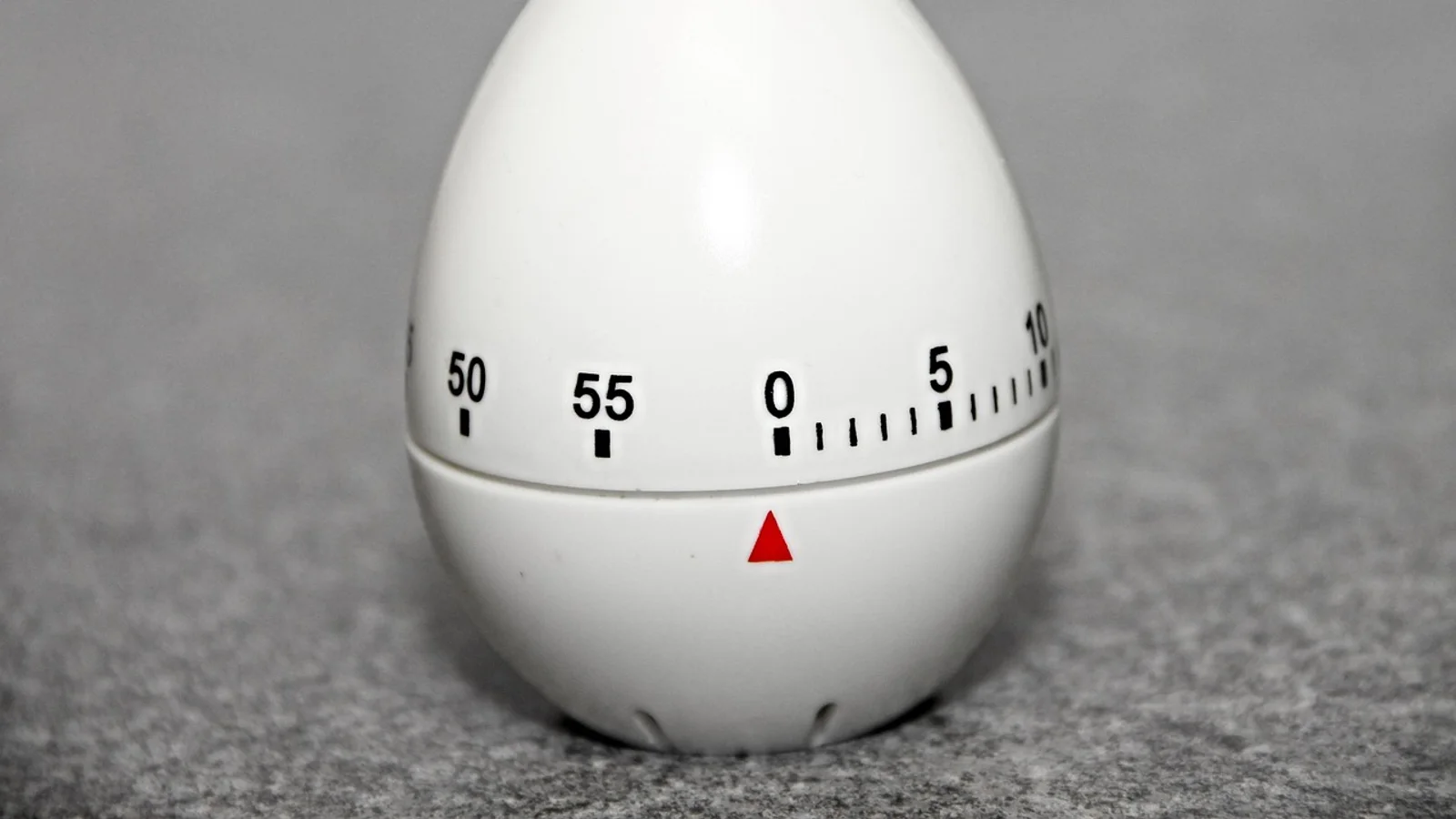
The reception desk smells of hand sanitizer and, from the hallway, the faint burnt dust of the autoclave. It is a Tuesday in late October, and the light has already left the window by four. I am standing at the counter with a laptop bag over my shoulder, waiting for the practice manager. Fatima turns the dial on a small white kitchen timer, the kind with the twist and the single bell, to fifteen minutes. She sets it down beside the keyboard. On the screen, the same appointment sits in pale blue. She does not look at it again.
When the timer rings, she picks up the phone before she looks at the screen. She does not check whether the system agrees. She already knows.
What the screen records
The booking system is not broken. Schedules, patient names, and slot allocations sit neatly in the cloud database. Push alerts fire on schedule; delayed rows illuminate in amber when appointments slip. Judged by ordinary procurement standards, it represents a competent piece of medical software.
What it cannot do is tell Fatima that the room down the hall is ready. It does not know that the patient in chair two is still talking to the dentist about a bridge, or that the assistant has not yet wiped down the tray. It records intervals and statuses. It does not carry urgency, presence, or the small social judgment that decides when a person should be interrupted.
So she keeps a second clock. The timer is audible from the hallway, visible at a glance, and it holds the state of the morning in a form she can monitor without staring at a screen. When the bell goes, she has already made the decision. The screen is a record. The timer is a signal.
The work of translation
I have configured scheduling systems. I have sat in front of settings menus and changed reminder tones, adjusted escalation rules, turned on pop-ups that were supposed to make the screen impossible to ignore. Some of what Fatima does with the timer is a workaround for choices I or someone like me made badly. A louder alert, a better placement of the monitor, a reminder that fires when the appointment is actually running late rather than when the slot ends. I know this. I might be romanticizing a plastic dial that exists because a settings menu was never opened.
But I have also watched what happens when the person at the desk is away. The timer is not in the system. The screen shows every appointment in pale blue, perfectly in sync, and two patients arrive for the same chair. The work of translation is invisible until the translator is gone.
That translation is the job. The software records the schedule. The receptionist turns it back into a sequence of human moments: the patient in the chair, the room that is ready, the moment when calling the next name is kind rather than merely correct. The timer is the physical anchor for that translation. It is the part of the system the screen cannot represent.
The cost of two records
The timer gives her a reliable signal she can hear from the hallway and trust when the screen is busy or asleep. The cost is that she now maintains two records of the same morning. When they disagree, she has to decide which one is right. That decision does not appear in the system’s audit log. It does not show up on any dashboard. It lives in her hands and her attention, and it is the first thing to go when the practice is busy and the second thing to go when she is replaced.
I am not making a plea for kitchen hardware, but for recognizing what that mechanical spring actually accomplishes. Practice owners face relentless marketing for integrated cloud portals and automated reception kiosks. Software vendors promise the screen will handle coordination end to end. In truth, code manages only the static ledger. The felt human cadence that preserves order in a crowded waiting room was simply left out of the architecture.
A well-configured system can send reminders, escalate overdue appointments, integrate with the calendar. The counterargument is strong: building a parallel timer is a sign that the software was poorly implemented, not evidence that screens are inherently inadequate. The right response is better configuration and training, not nostalgia for kitchen gadgets. I have made that argument myself, and I still believe most of it.
What I am less sure about is whether configuration can carry the part that matters. The timer is a failure of the specification. We built a system that records the appointment and forgot that someone has to decide when to call the next name. We left that decision to the person at the desk, and then we gave her a screen that does not help her make it.
What the timer knows
The timer rings. Fatima picks up the phone before she looks at the screen. The pale blue appointment is still there, unchanged. She says the patient’s name into the receiver, and the room down the hall is already ready for them.
#Essay #work #software #smallbusiness #scheduling software #reception work #everyday work #small business IT #human judgment