Must read stuff · No. 05
The Workshop Manual and the Thumb on the Blade
My father-in-law sharpens a chisel on a grinder with no guard and no manual. He checks the edge with his thumb, not a dial. The knowledge that keeps small workshops running lives in hands and habits, and the tools we build to capture it often record the steps while losing the judgment that made the work safe.
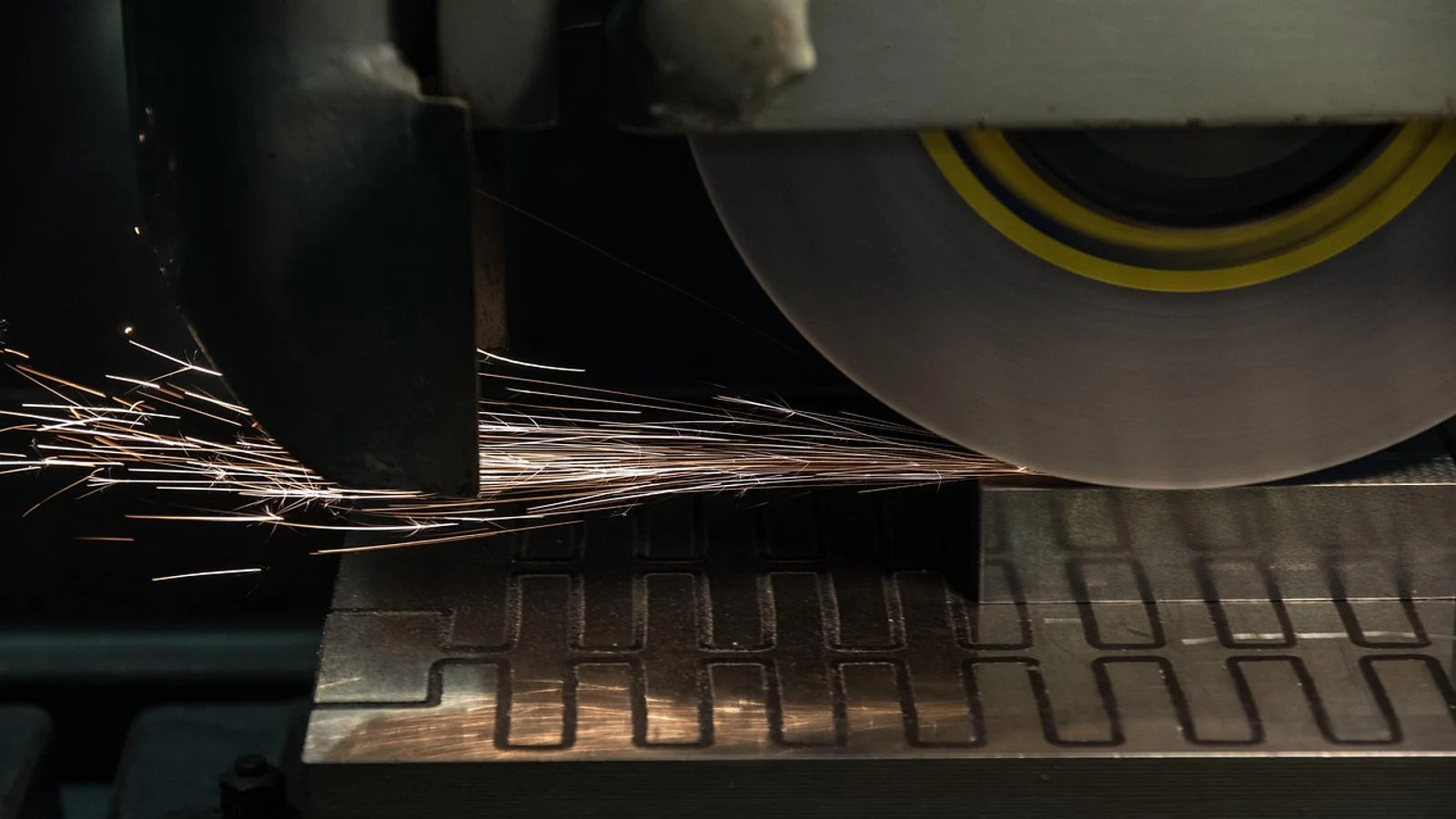
The basement smells of cold steel and old oil. My father-in-law stands at the bench grinder, a chisel in his right hand, and the wheel is already turning. There is no guard on it. There is no manual anywhere near it. The toggle switch is a piece of brass he fitted himself, and it has a warm, dull shine from his thumb.
He lays the blade against the wheel, tilts it, and holds it there. The grinder whines and throws a thin line of sparks against the concrete wall. The motor cuts out. A calloused thumb tests the sharpened bevel, feeling for the microscopic wire burr along the steel. No one consults a protractor or a digital angle guide. Setting the tool aside, he draws a worn oilstone across the face with two practiced strokes, then tilts the cutting edge toward the hanging bulb. “There.”
The part that never gets written down
I have spent most of my working life inside small businesses, and I have watched this same thing happen in law offices, clinics, studios and one warehouse with a very optimistic printer. The person who knows how the place actually runs is rarely the person with the most documentation. It is the person who has done the thing enough times that the doing has moved out of the head and into the hands.
That knowledge is compressed. It has to be. If you had to explain every tilt of the wrist and every pause before the next pass, you would never finish a single chisel. The gesture is faster than the explanation. The thumb on the blade is faster than the dial.
Software does not see any of this. It sees the transaction. It sees that the chisel was sharpened, the job was marked complete, the invoice was sent. It records the steps, and the record looks whole. What it cannot record is the felt sense of when the wheel is too hot, when the steel is about to lose its temper, when the angle is wrong in a way that no checklist would catch. That part stays in the hand, and the hand is not connected to the system.
The good side is real
I am not going to pretend the old way is always better. Digital tools make work visible in ways that matter. A shared calendar, a photographed procedure, a short video of someone doing the job correctly: these things travel. They reach the new hire on her first day, the person covering for someone on vacation, the owner who is trying to remember how the thing was done before the last person left. A camera and a checklist can preserve what a retiring machinist knows better than an apprentice’s memory can. That is not nothing. For a small business with three employees and no margin for a long apprenticeship, it can be the difference between continuity and collapse.
The counterargument is strong, and I take it seriously: without systems, knowledge dies with the person who holds it. Small businesses are especially vulnerable to that. The machinist retires, the shop closes, and the next owner buys the building and finds a grinder with a brass switch and no idea what it was for. A written procedure, even an imperfect one, is a hedge against that loss.
What the record leaves out
But the record is not the work. The record is a summary of the work, and every summary leaves something out. The thing it leaves out is usually the thing that mattered most that day: the sound the machine made before it seized, the way the client’s voice changed when the question was wrong, the reason the experienced person stopped and did not proceed.
I have recommended systems that produced beautiful records. I have watched a competent person follow the checklist exactly and still get the wrong result, because the checklist did not include the judgment that made the steps safe. The new hire does everything right and the thing goes wrong anyway, and she blames herself. That is the cost. Not the software fee. The quiet erosion of the sense that the work is knowable.
I might be romanticizing the unrecorded. Some of what feels like craft is just habit that should have been written down years ago. Some of the old-timers I admire were simply the only ones who knew where the fuse box was, and that is not wisdom, it is a single point of failure. I have met plenty of people who used the mystery of their knowledge to keep themselves necessary, and that is not a tradition worth preserving.
Still, the thumb on the blade is not a mystery. It is a skill, and it can be taught, but it is taught by standing next to someone, not by reading a manual. The manual is in the drawer. It has been in the drawer for years. He has never needed it, and I am not sure he has ever opened it.
The brass switch is warm
He sets the chisel on the bench, picks up the next one, and the grinder whines again. The brass switch is warm under his thumb. The manual is still in the drawer, unopened. He does not look at it. He does not need to. The wheel turns, the sparks fall, and his hand knows when to stop.
#Essay #tacitknowledge #craft #smallbusiness #tacit knowledge #small business #knowledge management #apprenticeship