Must read stuff · No. 20
The green light in the coat closet
A clinic, a UPS in a converted coat closet and a green check mark that says everything is protected. The light reports the battery. It does not report what got plugged in after the electrician left, and the person who would know is not on the dashboard.
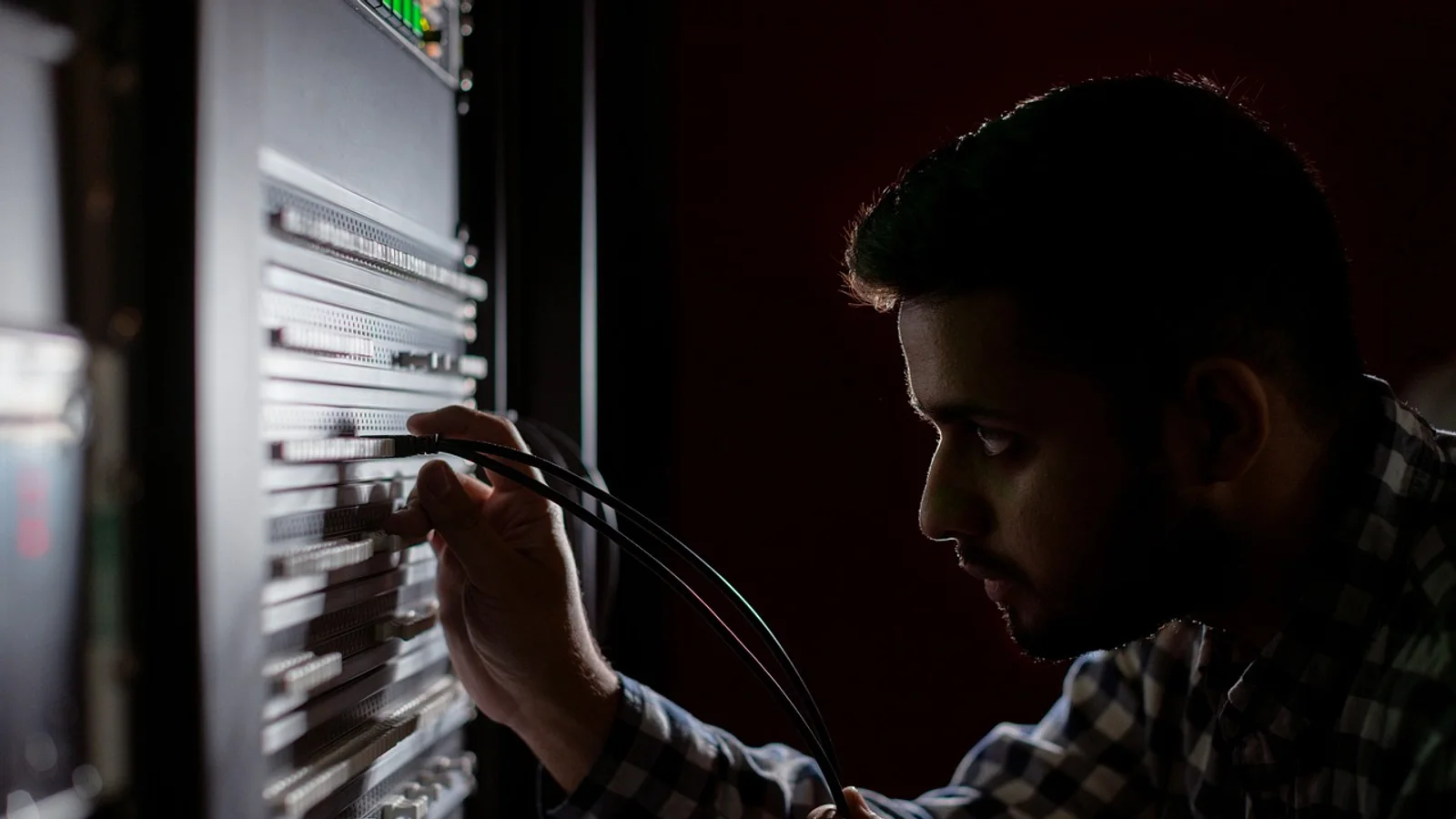
It is a Friday afternoon in March, and I am standing in a converted coat closet on the third floor of a physical therapy clinic, listening to a fan that has just stopped. The closet holds a small rack, a switch, a router and a UPS the size of a shoebox. The UPS is beeping every four seconds, and the beep is the same pitch as the smoke alarm we had in the waiting room, which is why I flinch the first time. Behind me, the clinic manager is holding a tablet that shows a green check mark and the word Protected. The fan is not turning. The rack is warm through the perforated door.
What the check mark knows
The UPS measures its own battery voltage and whether AC input is present. That is the whole of its report. It does not measure whether the switch plugged into it draws more than it did when the UPS was installed. The green light means the battery is full, not that the battery is large enough. The size question was answered by an electrician at install time, in a conversation that is not stored in the device.
I know this because I have been the person on the other end of that conversation, and I have also been the person who forgot it. The status light is a small, honest instrument. It answers the question it was built to answer.
The room is asking a different one.
The good part
I should say what the light does well, because it does something real. Last year it caught a failing battery before anyone noticed. The manager, who does not open the closet unless something is beeping, saw the amber warning on the tablet and called me. I replaced the battery the next day. Nobody lost a patient record or a booking. That is not nothing. A non-technical manager with a clear signal and a phone number is a better system than a closet full of blinking lights that only an electrician can read.
The cost is that the light answers the easiest question and looks like it answered the hard one. The tablet was set up to be reassuring. It was not set up to be read critically, and that is a design choice someone made, probably with good intentions, probably on a deadline.
The load that grew
The closet was wired for one switch and a phone system. Since then, the clinic has added a second switch, a wireless access point, a small NAS for imaging files, and a router that runs warmer than the old one. None of these additions required a conversation with an electrician. Each one was a reasonable decision made by a reasonable person on a Tuesday.
The UPS, meanwhile, kept reporting on the battery it was given. It has no way to know that the load behind it has doubled. It has no way to know that the breaker it shares with the kitchenette trips when the coffee machine and the microwave run at the same time, which is why the UPS has been triggered twice this winter. The knowledge of that shared breaker lives in the electrician’s head, and the electrician does not work for us.
The stronger view
A dashboard that shows battery health, input voltage, load percentage and runtime estimate would be strictly better than a single light. The manager would learn to read it. She is intelligent and she is motivated. The technology exists. The objection is not technical.
The objection is that a dashboard is another thing to check, and the person checking it is already doing three jobs. The light works because it is small and it is in her hand. A dashboard might work better, or it might become another screen she glances at and stops seeing. I have installed both kinds. The ones that get read are the ones that fit into a routine that already exists.
What I might be wrong about
I may be romanticizing the electrician. He was not a saint. He wired the closet to a breaker that also fed the kitchenette, and the coffee machine was the reason the UPS had been triggered twice that winter. The knowledge lived in his head, but some of it was wrong. The informal channel is cheap because someone else is paying for it later, and sometimes the person holding the knowledge has already made the mistake that will cost you.
So the answer is not to trust the electrician more. The answer is to write down what the closet contains, and what it was sized for, and what has been added since. That is a small piece of work that nobody wants to do. It is also the only thing that would have told the manager, on Friday afternoon, that the green check mark was telling the truth about the battery and nothing at all about the room.
The fan comes back on. The beep stops. The manager lowers the tablet, puts it face down on the counter, and says she will call the electrician on Monday. She does not write anything down. The closet door stays open an inch, because the latch sticks, and the warm air comes out into the corridor where the patients are sitting.
#Essay #ITconsulting #smallbusiness #UPS #serverroom #UPS status light #small business IT #server closet #battery backup #everyday work