Must read stuff · No. 16
The Badge Reader That Remembered a Different Staff
The studio's back door clicked open for a key card that had been deactivated two years earlier. Nobody had touched the reader since the previous tenant moved out. The lock was doing its job. The job had been defined by someone who was no longer in the building.
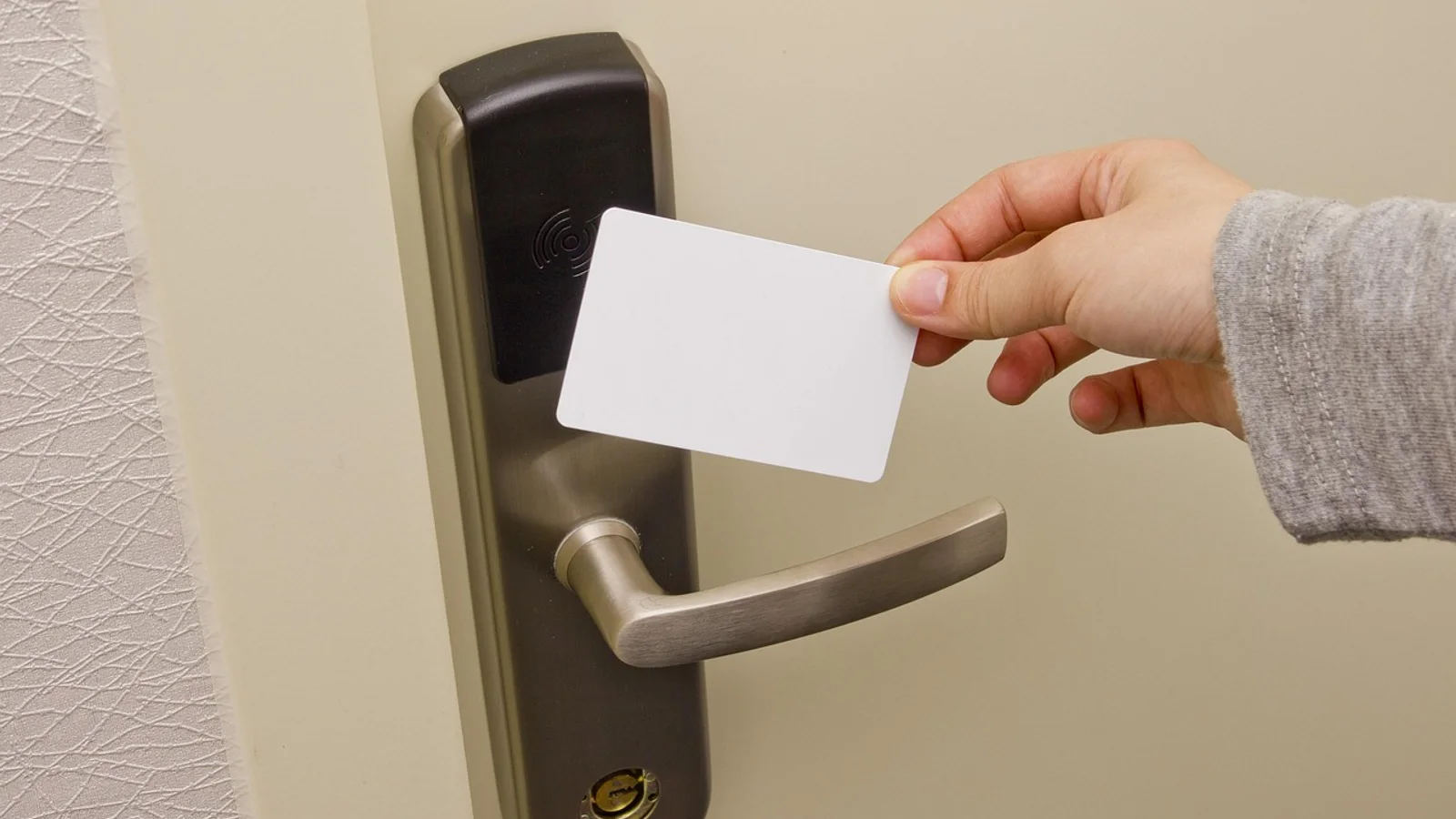
The back door of the photography studio buzzed open at 7:12 on a Tuesday morning, and the woman standing on the step was not expecting it to. She had her key card in her hand, the old one, the one with the peeling corner, and she had already turned to leave. The door clicked. She pushed it and went in.
I was in the front room, on a stool, with a laptop balanced on a light stand, trying to get the studio’s booking calendar to stop double-booking the north bay. The woman came through the back hallway and stopped when she saw me. She said she was sorry, she thought the place was empty, she had come to pick up a lens she had left behind when she moved to the other side of town. She held up the key card. She said she had not used it in two years and had assumed it was dead.
The Reader and the List
The back door had a key card reader, a small gray box with a red light that turned green. The reader itself was fine. It had been fine since the previous tenant, a small print shop, had installed it. The print shop had given key cards to its staff, and when the print shop moved out and the photography studio moved in, the studio kept the reader and the lock and the door, because they worked, and because replacing a door lock is not how anyone wants to spend a Tuesday.
The studio’s owner had been given a new set of cards for her staff. What she had not been given, and had not asked for, was the list inside the reader. The reader did not care about the studio’s list. It cared about its own list, which still contained the print shop’s cards, including the card belonging to a woman who had once worked the front desk there and who now stood in the hallway holding a lens case and looking embarrassed.
What the List Was For
The list was not a security feature in any meaningful sense. It was a convenience. It let the print shop’s staff come and go without a key, and it let the owner revoke a card when someone left. When the print shop left, the list stayed. The reader kept checking cards against a roster of people who had stopped working there two years ago, and it kept opening the door for them, because that was what it had been told to do.
I have seen this before, in different shapes. A shared drive with permissions for an employee who left in 2019. A booking system with a service category nobody offers anymore. A phone tree that routes callers to an extension that rings in an empty room. The pattern is the same: a system is configured for a real situation, the situation changes, and the configuration outlives it. The system does not know that the situation changed. It only knows the list.
The Good Part
The reader was repairable. That is the part I want to be honest about. I did not have to replace the lock or the door or the reader. I plugged a laptop into the reader’s service port, pulled up the card list, and deleted the entries that belonged to the print shop. It took maybe fifteen minutes, including the time I spent figuring out which entries were which, because the list showed card numbers and not names.
The woman with the lens case waited while I did it. She said she was glad the door had opened, because she had driven across town, and she said she was also a little unsettled, because she had assumed the card was dead and had not thought about what it meant that it was not. I deleted her entry last. She handed me the card and I put it on the desk, and she took her lens and left through the front door, which was propped open with a sandbag.
The Cost of a List
The cost was not the lock. The lock worked. The cost was two years of a door that opened for people who no longer worked there, and nobody knew, because the door only opened for people who had a reason to be there and who did not think to mention it. The woman with the lens case had not mentioned it because she assumed the card was dead. The studio owner had not asked because the door worked. I had not asked because I was there for the calendar.
There is a version of this where the cost is worse. A card gets lost, or copied, or handed to someone who should not have it, and the door opens for them too, and the list is the reason. I am not going to pretend that this is a hypothetical. It is the reason card lists exist. But the studio owner was not running a bank. She was running a photography studio with four employees and a booking calendar that double-booked the north bay. The door was not the thing keeping her up at night.
The Strongest Objection
The strongest argument against my reading is that this is just how small businesses work. You inherit a door, a lock, a reader, a list, and you do not audit the list because the list is not the thing you are trying to do. You are trying to book the north bay and pay the rent and get the prints out. The door opens for the people who need it to open, most of the time, and the exceptions are rare enough that they do not rise to the level of a problem.
I have held that position myself. I have walked past a reader with a green light and thought, that is fine, that is working, and moved on to the thing that was actually broken. The reader was not broken. It was doing exactly what it had been told. The problem was that the telling had happened two years ago, in a different business, and the person who did the telling was gone.
What the Green Light Meant
I finished the calendar fix and packed up my laptop. The studio owner came back from a shoot and I told her about the reader. She said she had not known. She asked if it was a problem. I said it was not a problem now, and she said good, and went to move her car.
The reader on the back door still has a red light that turns green. It turns green now for the studio’s cards and not for anyone else’s. The woman with the lens case has a dead card on the studio’s desk, and the studio owner will probably throw it away, or put it in a drawer, or forget about it.
On my way out I pushed the back door and it clicked open, and the green light came on, and I stood on the step for a moment in the cold. The door had opened for me because the studio owner had added my card to the list that morning, before I arrived, so that I could get in. She had done it without thinking about it. It was the same thing the print shop had done, two years earlier, for a woman who was now driving home with a lens case on the passenger seat.
#Essay #smallbusiness #ITsupport #inheritedsystems #small business IT #inherited systems #access control #key card #configuration drift #repairable tools